Orienting campus-community engagement towards reparations
Campus Compact 2022
March 29-31, 2022 (Virtual Conference)
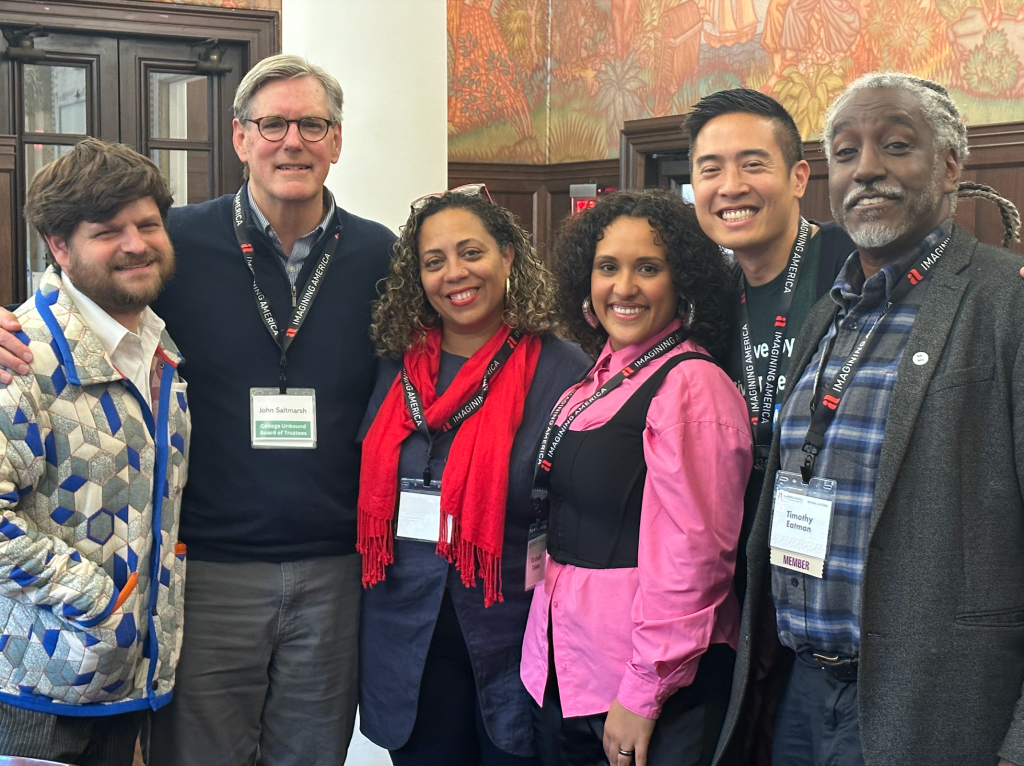
Presenters:
Rachel Winters, Director, Office of Student Leadership and Community Engagement
Tim Eatman, Dean of the Rutgers Newark Honors Living Learning Community. Dr. Eatman is a member of the Higher Education Reparations Engagement (HERE) taskforce.
April Khadijah Inniss is the Engaged Community Research Director of King Boston and is a member of the Higher Education Reparations Engagement (HERE) taskforce.
George Luc is the founder and CEO of GivePulse and is a member of the Higher Education Reparations Engagement (HERE) taskforce.
About:
This session introduces participants to a new national resource and networking hub and involves them in a process of envisioning what community engagement efforts can look like when oriented toward reparations locally and nationally.
Higher Education Reparations Engagement (HERE) is an open-source platform created by and supported through a collaboration between GivePulse (givepulse.com), King Boston (kingboston.org), and a diverse taskforce of scholars and community advocates from across the United States. Participants will be introduced to the resources and networks of HERE and learn how to contribute to the hub. Session participants will also collectively examine and share the possibilities of community engagement in their partnerships aimed at advancing reparations locally and nationally.
The field of community engagement in higher education has, over the past decade, taken a more critical turn, explicitly accounting for power, politics, privilege, and positionality in how community engagement partnerships and experiences are designed, and in attending to social and racial justice outcomes for students and communities. Along with a more critical perspective, scholars and practitioners have reexamined the kinds of community partnerships needed to address racial justice and equity and the kinds of projects that advance social justice in a diverse democracy committed to equity.
As part of this critical turn, community engagement programs on college campuses can orient efforts toward local and national reparations. To do so would mean, in part, working to help create political conditions addressing issues of power and justice (which would mean understanding engagement as political work).
How does this session contribute to the conference theme? We seek proposals that explore our theme: A Better Way Forward: Innovation with equity at the center. The conference will explore how we can imagine a better way forward, mobilizing the power of higher education to drive innovation, build connections, and create a new normal centered in equity and justice.
The field of community engagement in higher education has, over the past decade, taken a more critical turn, explicitly accounting for power, politics, privilege, and positionality in how community engagement partnerships and experiences are designed, and in attending to social and racial justice outcomes for students and communities. Along with a more critical perspective, scholars and practitioners have reexamined the kinds of community partnerships needed to address racial justice and equity, the kinds of activities students are involved with to achieve civic learning outcomes, and the kinds of projects that advance social justice in a diverse democracy committed to equity.
As a part of this critical turn, and in the spirit of finding a better way forward, community engagement programs on college campuses could orient their efforts toward local and national reparations. To do so would mean:
- Working to help create political conditions addressing issues of power and justice (which would mean understanding engagement as political work).
- As political work, students involved with this kind of community engagement would need preparation in and development of organizing skills, to build a grassroots effort.
- Doing organizing and advocacy work would mean thinking about partnerships in a different way – partners would not be receiving a social service but would be collaborators in building coalitions to support political action.
- Programs focused on reparations would have an opportunity to develop curriculum around racial inequality in the United States as a foundation for the advocacy work.
- The community outcome of the engagement would be measured in effectiveness of organizing and coalition building, not the performance of a service.
- This would also mean that the project will not be completed in a semester; therefore, students would need to pass along their knowledge and relationships to a new group of students to continue to build the work.
In many ways, this is a shift that many practitioners in the field have been pointing towards to achieve the aims of equity and justice in community engagement work. This project offers a concrete way to imagine a different way forward for the field.
How does this session contribute to goals for equity & inclusion?
Higher education institutions have historically been shaped out of and profited from the enslavement of and discrimination of Black people and the land stolen from Indigenous people. The programs and activities of higher education institutions reflect this systemic racism and colonialism, and this is no different for programs and activities related to community engagement. Community engagement practices are positioned to reimagine relationships with local communities such that colleges and universities can acknowledge, work towards repair, and help to heal the harms of this history and its legacy in the present. As such, this session is focused on equity and inclusion, but also on justice and working to assist in having higher education fulfill the highest aspirations of a democracy committed to equity.
Orienting campus-community engagement towards reparations
Association of American College and Universities Annual Conference
January 22, 2022
Abstract: How might community engagement in higher education be practiced through partnerships focused on and driven by commitments to reparations for slavery and colonialism? This session engages participants in examining this question to imagine what community engagement could look like if it were done through a lens of retrospective justice as well as a commitment to critical awareness and action to address current social and racial injustice. This 75-minute discussion session introduces participants to a new national resource and networking hub, Higher Education Reparations Engagement (HERE), and involves them in a process of envisioning what community engagement efforts can look like when oriented toward reparations locally and nationally.
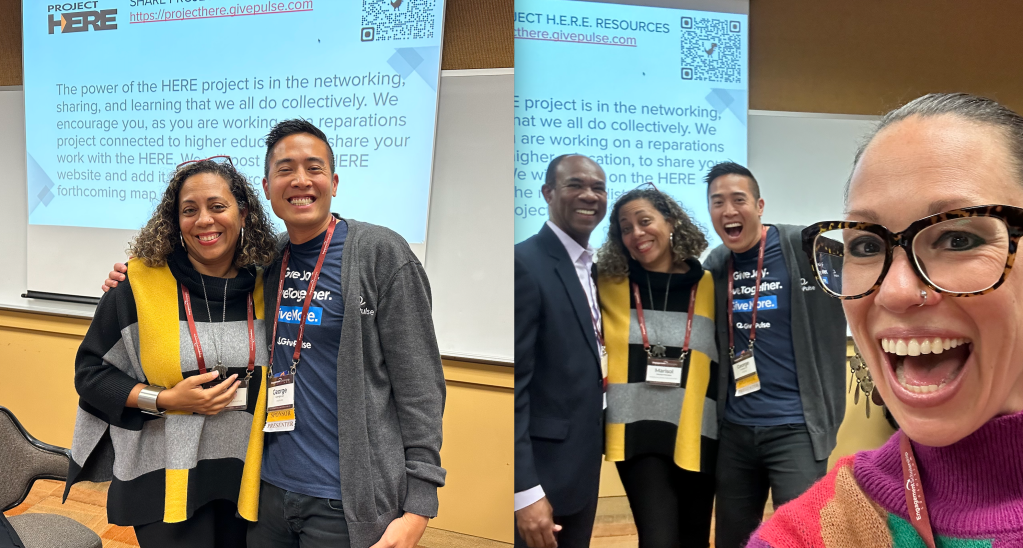
Presenter information:
- Tim Eatman, Dean of the Rutgers Newark Honors Living Learning Community. Dr. Eatman is a member of the Higher Education Reparations Engagement (HERE) taskforce.
- April Khadijah Inniss is the Engaged Community Research Director of King Boston and is a member of the Higher Education Reparations Engagement (HERE) taskforce.
- George Luc is the founder and CEO of GivePulse and is a member of the Higher Education Reparations Engagement (HERE) taskforce.
- John Saltmarsh, Professor of Higher Education at the University of Massachusetts, Boston, and a member of the Higher Education Reparations Engagement (HERE) taskforce.
Community-based Reparations Research
International Association for Research on Service Learning and Community Engagement (IARSLCE) Annual Conference
November 17, 2021
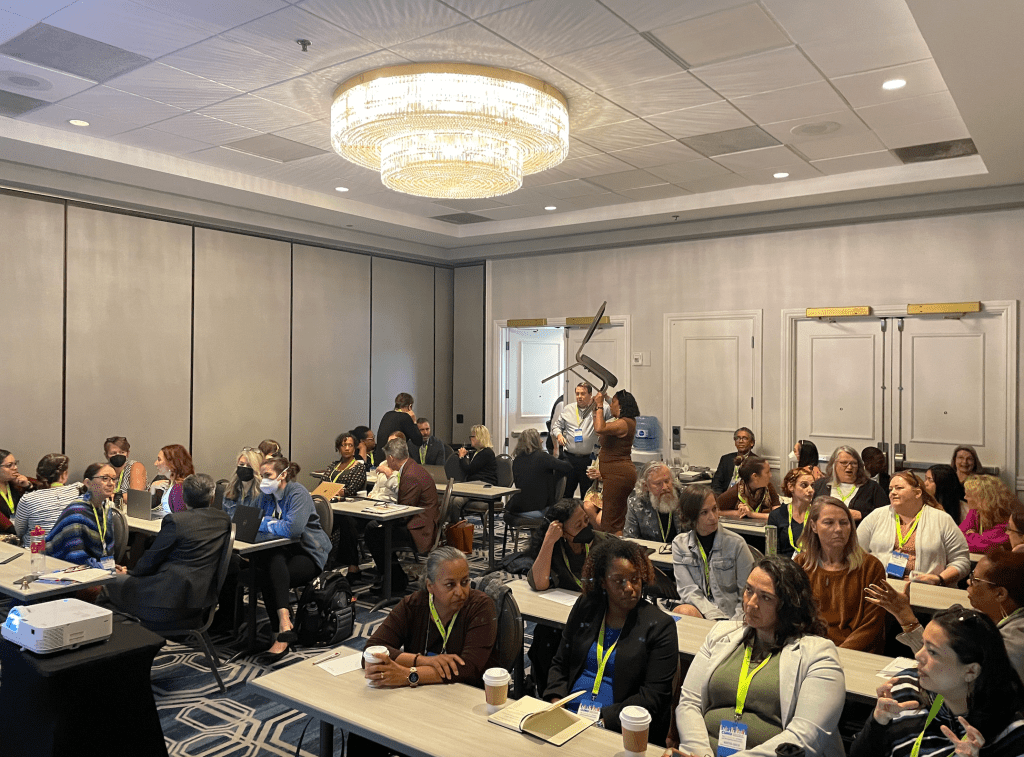
Abstract: For the research initiative, “Crafting Democratic Futures: Situating Colleges and Universities in Community-Based Reparations Solutions,” scholars at Rutgers University-Newark are collaborating with local community partners in a community-based research project designed to yield tangible, community-based racial reparations solutions that reflect the specific histories and contemporary circumstances of the local community.
Presenter information:
- Tim Eatman, Dean of the Rutgers Newark Honors Living Learning Community and PI on the “Crafting Democratic Futures: Situating Colleges and Universities in Community-Based Reparations Solutions” research project. Dr. Eatman is also a member of the Higher Education Reparations Engagement (HERE) taskforce.
- Ryan Haygood is the President and CEO of the New Jersey Institute for Social Justice and a Community Fellow on the “Crafting Democratic Futures: Situating Colleges and Universities in Community-Based Reparations Solutions” research project.
- April Khadijah Inniss is the Engaged Community Research Director of King Boston and is a member of the Higher Education Reparations Engagement (HERE) taskforce.
- George Luc is the founder and CEO of GivePulse and is a member of the Higher Education Reparations Engagement (HERE) taskforce.
- John Saltmarsh, Professor of Higher Education at the University of Massachusetts, Boston, and a member of the Higher Education Reparations Engagement (HERE) taskforce.

 Project H.E.R.E. (Higher Education Reparations Engagement)