Leading Campuses Toward Repair
Following the lead of reparations scholars William Darity and Kristen Mullen, H.E.R.E. has focused attention on presidential leadership. Darity and Mullen look to “colleges and universities to become sponsors of a national program of reparations” (Darity & Mullen, 2022, p. 269). This requires executive leadership. At H.E.R.E., we asked – what role do college and university presidents have in examining reparations?
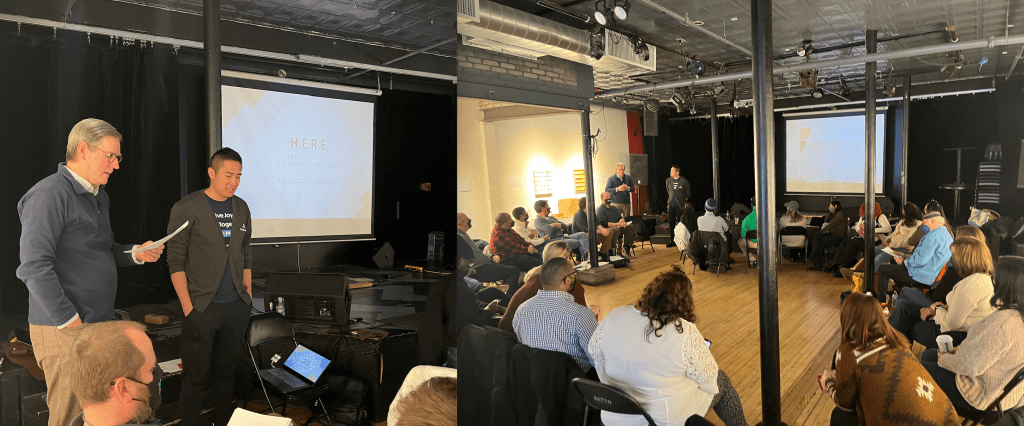
To begin to address this question, H.E.R.E. collaborated with the Anchor Institutions Task Force (AITF) in a virtual convening of a diverse group of college and university presidents funded by The Boston Foundation on October 6, 2022. This meeting of eight presidents from across the country was the first national meeting of college and university presidents discussing higher education’s role in reparations. The presidents explored how the work of reparations can align with, and enhance, efforts focused on racial equity and justice on their campus and in local communities. Their discussion was framed by the questions: What is the role of college and university presidents – more broadly, the senior executive leadership on campus – in collaborating with other organizations as part of local, state, and national alliances advocating for reparations as public policy? How can senior leadership help in examining how anti-Black racism and colonialist logics shape the cultures, structures, and practices of our campuses? What kinds of supports can assist senior leadership in bringing the work of reparations into higher education spaces?
College and university presidents have unique and distinct roles to play in advancing equity and justice through reparations. They can focus on how applying a reparations lens to campus operations can advance campus equity work. They can work locally with other campus presidents and with leaders in other sectors to advance local reparations efforts. They can work through their state, regional, and national associations to advocate for policies advancing reparations. They can speak out against growing and insidious efforts to render the known history of slavery and colonialism and their afterlife unspeakable. Leadership matters.
A Special Role for Campus Leaders
Exploration
HERE encourages campus leaders – Chancellors, President, Provosts – to attend to restorative and transformative justice on campus through exploring how the legacies of slavery and colonialism are embedded in the institutional life of your campus. If, in your exploration, you find that your campus is implicated in and impacted by the legacies of slavery and colonialism in the present, then HERE encourages you to commit to implementing a process towards acknowledgement, repair, and healing.
Collaboration
HERE encourages campus leaders to attend to restorative and transformative justice in the local community by collaborating with local civic and political leaders and with community-based organizations to support efforts to explore and enact local reparations or encourage the creation of such efforts.
Commitment
HERE encourages campus leaders to attend to restorative and transformative justice nationally by supporting a national program of reparations. This could mean issuing a public statement on behalf of your campus in support of current congressional legislation, the bill HR 40. If you make such a commitment, we ask that you share your statement with HERE as a model and catalyst for others to make similar commitments.

 Project H.E.R.E. (Higher Education Reparations Engagement)